Why I built this.
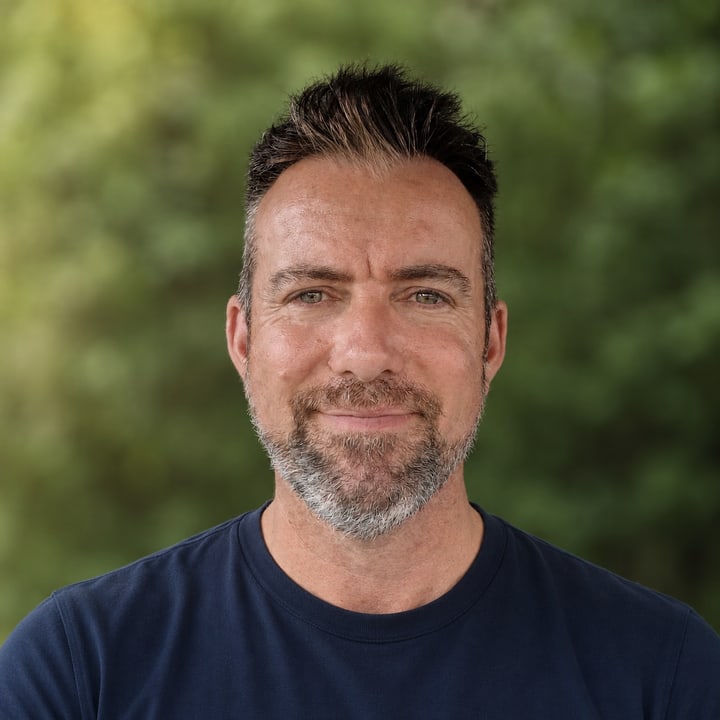
I'm a cable jointer. I work long hours, mostly outside, joining the underground cables that keep the lights on across the south of England. It's not the obvious background for someone who builds supplement reports.
I'm also fifty. I mountain bike. I row. I run. I lift. I've kept up with all of it for as long as I can remember, and at fifty it hasn't slowed me down much yet, and I want to keep it that way for as long as I can.
That's where this started.
The original problem.
I'd been on and off with supplements for years. The same loop, every time: spend hours reading, build a stack, take it for a few months, feel like maybe it's working, and then six months in, find out the form I was taking absorbs at four percent, or the dose was twice what the evidence supports, or the compound is contraindicated with something else I take.
Nobody tells you. The bottle doesn't tell you. The blog post that recommended it certainly doesn't tell you. There's no way to get a definitive answer unless you're prepared to dedicate yourself to a personal research project.
So I did. I started reading the studies. I built spreadsheets. I learnt to grade the evidence properly: A, B, C, and to be honest about which compounds genuinely deserve their reputation and which are riding on noise.
Then everyone wanted in.
Family started asking. Then friends. Often they'd come to me convinced they'd found something amazing, usually something a wellness influencer had pitched as life-changing, and we'd go and look at the research, and the research wouldn't support the claim. Sometimes it would, but the form they'd bought was the wrong one, or the dose was wrong, or it was actively interacting with their medication.
It started to feel useful. Not as a service I was selling, just as something people genuinely needed: a clear answer, backed by the actual evidence, specific to their profile.
Distil is what that became.
What I refuse to do.
I don't sell supplements. I don't take affiliate cuts. I don't recommend brands. The reports tell you exactly what the product you should buy needs to contain: the form, the dose, the timing, the things to avoid. You buy it from whoever you trust.
That's deliberate. The moment a report becomes a sales funnel, the advice becomes corrupted, and you end up with what already exists everywhere else.
There's nothing worth shipping if it's just another version of the thing that's already failing the people who need it.
What I commit to.
Every report passes through five stages of analysis before it reaches you: compound scoring against your profile, a clinical safety cull, dose-locking against your medications and conditions, personalised writing across every section, and an independent safety review that holds the report if anything fails. Elsewhere we call this the two-stage review: everything up to and including the writing is the first stage, and the independent safety pass that can hold the report is the second. A typical report runs 25 to 30 pages.
My name is on the company, and the buck stops with me. If that independent review flags anything, the report doesn't go out: it is held for me to read personally, and it gets reviewed, rebuilt, or refunded until it is right. Nothing is ever sent unchecked.
Behind that, I'm building toward a named clinical reviewer: an Association-for-Nutrition-registered nutritionist who adds a second human pair of eyes on top of the evidence-graded compound database. That's coming.
The full methodology, the grading system, the hard exclusions, and the public calibration log are documented at /about/methodology. The longer story behind why Distil exists at all is at /journal/why-i-built-distil. And the free interactions checker lets you check any supplement against your medications, with a citation on every finding and no sign-up needed.
A small claim about credentials.
I have a BTEC National in Sports Science from before I became a cable jointer. I raced mountain bikes through my teens and twenties. I've always had a research project on the go: apparently that's just how I'm wired. None of that makes me a nutritionist, and I won't pretend otherwise.
What it does is make me the right person to build this specific thing: an evidence-graded compound database with a disciplined pipeline on top, an independent safety check, and a personal commitment that the answer is the answer, even when the answer is "you don't need this".